Standing Water Traced to Its Source
Drainage systems in Harlem for low spots and sloped yards where water collects against foundations and outbuildings
Water collecting against a foundation or outbuilding wall is not a random occurrence. It follows the grade of the lot, and on older rural parcels in Harlem it tends to concentrate at the same low spots every time: the downslope side of a house, against a detached garage slab, or in a backyard that was never properly graded when the property was first developed. V & S Grading walks each site to trace where water enters the lot, where it slows down, and what outlet is available before any trench or pipe is planned.
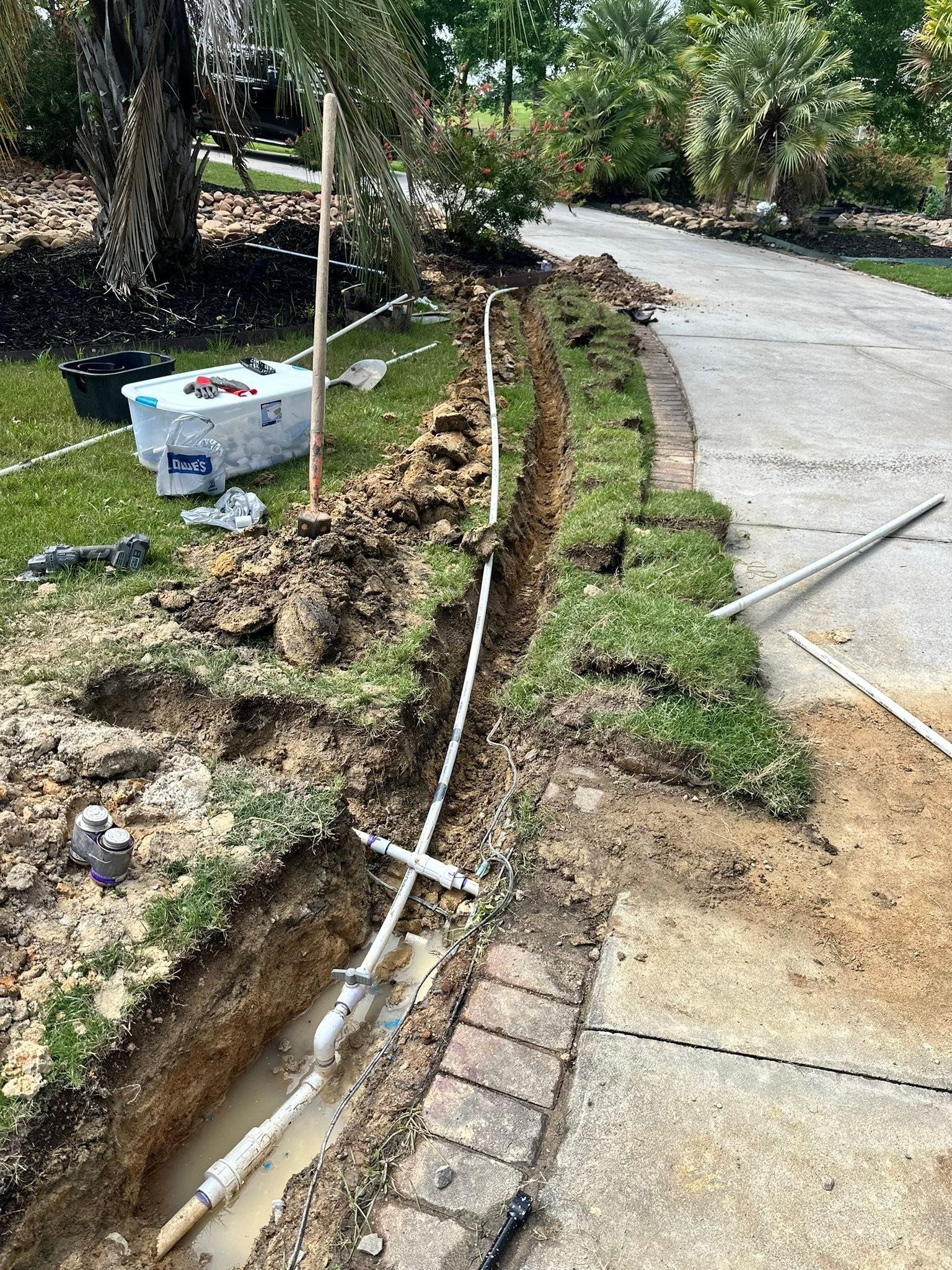
The crew locates the source of entry, plans the required fall toward an outlet, then sets pipe or channel drains in trenches cut to the correct grade before backfilling and finishing the surface grade. Whether the right solution is a French drain, a trench drain at a hard surface edge, or a surface channel that intercepts sheet flow depends on where the water originates and what outlet the lot provides. Recommending the correct drain type for each condition is a decision made on site, not from a standard package, and asking what outlet is planned before work begins is the most useful question a property owner can ask.
Arrange a lot walkthrough with V & S Grading to identify where water is entering and what drainage approach fits your property's grade and outlet conditions.
How Drainage Work Addresses Persistent Water Problems
A drain that works correctly moves water from where it collects to an outlet at a controlled rate without backing up or surfacing partway through the system. That requires the pipe or channel to be set at a consistent fall throughout its entire run, which is established with a level during installation and verified before backfilling. If any section of the pipe sags or the trench bottom is uneven, water stalls at that low point and the drain underperforms from the first heavy rain forward.
After the system is installed and the surface is restored, the observable change is that the areas that previously held water drain completely and do not revert to saturated ground around the foundation or along the outbuilding wall. The grade of the restored surface will direct sheet flow toward the drain inlet rather than away from it, and a properly set outlet will discharge to daylight or a storm structure at a point that does not create a new collection problem somewhere else on the lot.
Sloped backyards and low-lying parcels common in the Evans and Martinez areas sometimes require more than one drain type in combination, with a surface channel at the upper slope intercepting fast-moving sheet flow and a French drain lower on the lot handling the slower groundwater seepage. Understanding the difference between those two water movement patterns is what determines whether a single drain run solves the problem or only addresses part of it.
What Property Owners Ask About Drainage Work
These questions address how drainage systems are planned, installed, and evaluated on the types of residential and rural lots commonly found across Harlem and Columbia County.
What is the difference between a French drain and a trench drain, and when is each used?
A French drain uses a perforated pipe bedded in gravel to collect groundwater seeping through the soil, while a trench drain uses a solid pipe or channel set at a surface edge to intercept water running across a hard or compacted surface, and the choice depends on whether the water is moving through the ground or across it.
How is the outlet for a drainage system determined on a residential lot?
The outlet location is identified during the initial site walkthrough by tracing the natural grade to its lowest accessible point, which may be a roadside swale, a storm inlet, or a discharge point at the rear property line, and the entire pipe run is graded to fall toward that outlet without any low sections.
Why does pipe grade matter so much in a drainage installation?
Water moves through a drain only if the pipe maintains consistent fall from inlet to outlet, and any section where the pipe sags or levels off becomes a point where sediment accumulates and water backs up into the area the drain was installed to protect.
How does the age and grade of a parcel in Harlem affect how drainage is planned?
Older rural lots were often graded for the house footprint alone without accounting for outbuildings or additions added later, which creates low spots at the junctions between the original grade and newer disturbed areas, and those are the locations that typically require the most careful outlet planning.
What should a property owner check after a drainage system is installed?
After the first significant rain, verify that the inlet is accepting flow without backing up, the outlet is discharging freely, and the previously saturated areas are no longer holding standing water after the rain stops.
V & S Grading also
installs drainage systems in Grovetown, Evans, Augusta, Martinez, and Appling. To review your specific lot conditions and what drain type makes sense for your property, contact V & S Grading at (706) 901-0595 to schedule a site walkthrough.