Land Cleared and Ready for What Comes Next
Site work in Harlem for rural parcels with brush, stumps, and uneven ground that must be cleared before construction begins
Older rural parcels in and around Harlem regularly have decades of brush growth, standing trees at the perimeter, stumps from prior clearing, and ground that was never brought to a workable grade after the original structure went in. That combination of conditions has to be addressed in a specific sequence before a foundation, pad, or driveway can be started, and V & S Grading provides site work in Harlem, Georgia and out to roughly an hour's drive, covering the full sequence from clearing through final grading under one crew. Having one company responsible from cleared land to compacted subgrade means there is no gap between what the clearing crew left and what the grading crew expected to find.
The crew clears the area, removes or grinds stumps, strips topsoil from the work zone, then cuts and fills to the design grade and compacts it in lifts before the surface is ready for the next trade. Compacting in lifts rather than in a single pass is the step that distinguishes a properly prepared subgrade from one that looks level but will settle unevenly under a loaded slab or foundation. Before finalizing a site work quote, ask whether debris hauling, stump removal, and topsoil stockpiling are included in the scope, since those three items are frequently quoted separately and represent a significant portion of the actual work.
Discuss your parcel's specific clearing and grading needs with V & S Grading before the project is scoped to make sure the quote reflects what the ground actually requires.
What Site Preparation Actually Accomplishes
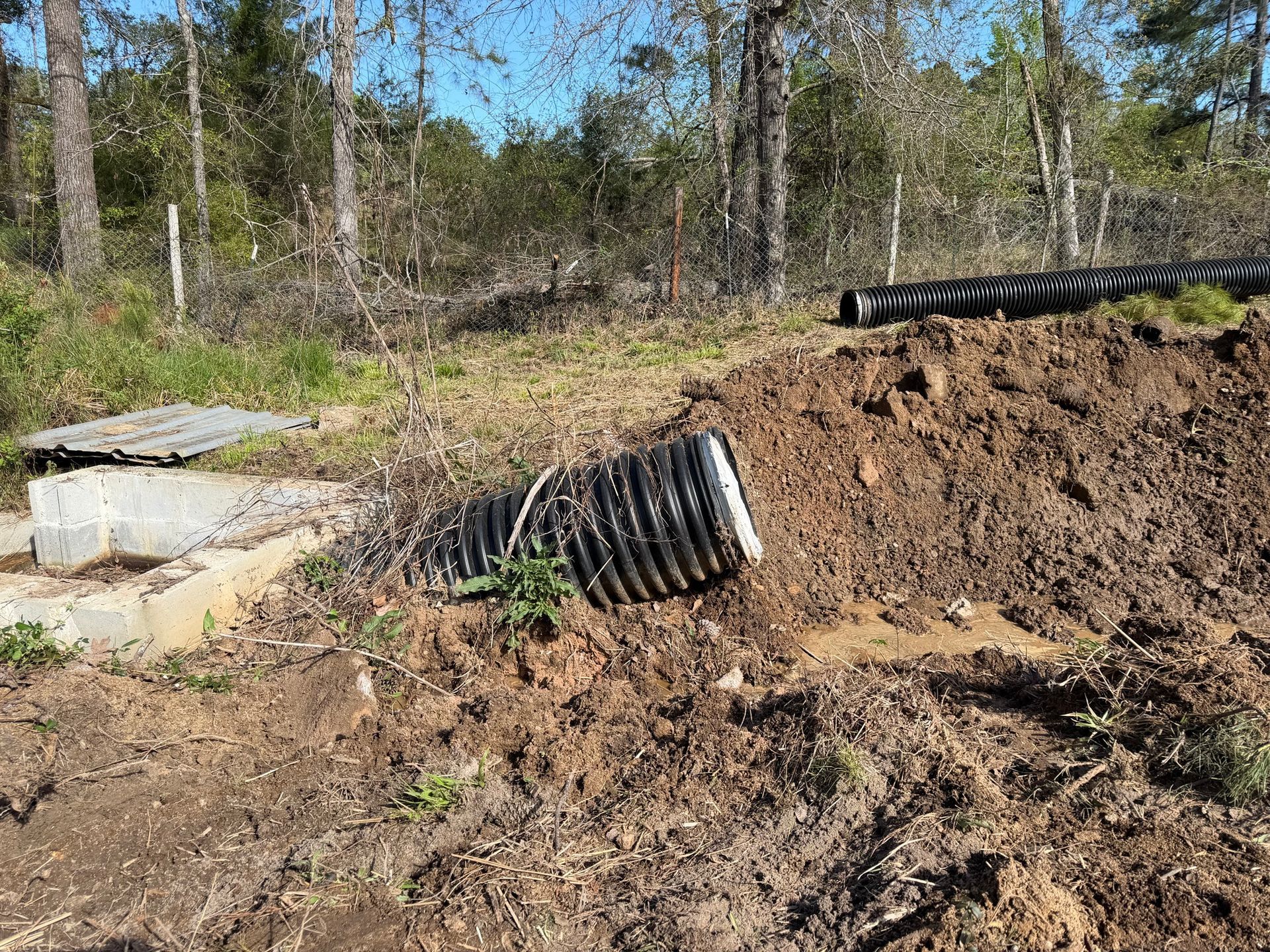
Site work produces a subgrade that is stable, at the correct elevation, and compacted uniformly enough to support whatever structure is being built above it. The clearing phase removes everything that would decompose beneath a slab or cause differential settlement over time, including root systems and organic topsoil, while the grading phase establishes the design elevation and cross-slope. Neither step alone is sufficient; clearing without grading leaves an uneven surface, and grading without clearing leaves organic material that compresses under load.
When site work is complete, the prepared area will be visibly level to the design grade, free of stumps and root debris, and firm underfoot without soft spots that indicate insufficiently compacted fill. The prepared subgrade should not show rutting under equipment at the end of the job, because rutting at that stage indicates the compaction was not achieved in the upper lifts and will need to be addressed before concrete or a foundation is placed on top of it.
Properties in the Hephzibah and Thomson areas often include parcels with multiple clearing phases—areas that were partially cleared at different times, leaving a mix of old stumps, second-growth brush, and existing grade changes that all have to be reconciled to a single design elevation. Identifying those conditions during the initial walkthrough rather than after clearing has started is what keeps the project on the planned scope and budget.
Questions Before Starting Your Project
Site work scopes vary significantly based on existing ground conditions, vegetation density, and what structure will be built on the prepared surface. The following questions address the decisions and sequencing involved in land clearing and grading on the types of rural and residential parcels common in Harlem and the surrounding area.
What is the correct sequence of steps from raw land to a construction-ready subgrade?
The sequence is clearing surface vegetation, removing stumps either by grinding or full extraction, stripping organic topsoil from the footprint, cutting and filling to design elevation, and then compacting the subgrade in lifts before any base material or structural work begins.
Why does compaction in lifts matter more than compaction depth at the end?
Compacting soil in eight-to-twelve-inch lifts allows each layer to achieve full density before the next is added, while attempting to compact a deep fill all at once only densifies the top few inches and leaves looser material beneath that will consolidate under load over time.
How is topsoil handled during site grading and why is it stripped rather than graded in place?
Topsoil contains organic material that compresses and decomposes under structural loads, so it is stripped from the work zone and stockpiled separately before any cut-and-fill work begins, then used later on non-structural areas or lawn surfaces where organic content is beneficial rather than a liability.
How do older rural parcels near Harlem affect the complexity of a clearing and grading scope?
Rural properties that were developed incrementally often have fill placed at different times, old stumps buried under later grading work, and existing structures that limit equipment access, all of which require the crew to probe and assess the ground during clearing rather than assuming a uniform condition across the parcel.
What should a property owner verify when reviewing a site work bid against competing quotes?
Confirm that stump removal, debris hauling off site, and topsoil stripping are explicitly included, because a bid that omits any of those items will require additional cost when those tasks arise on site, and they will arise on virtually every rural lot clearing project.
V & S Grading also performs
site work in Augusta, Grovetown, Evans, Martinez, and Appling. To review your parcel's clearing and grading requirements and get a scope built around what your specific ground conditions actually are, call V & S Grading at (706) 901-0595.