Fence Lines Set on Ground That Is Actually Ready
Fencing in Harlem for rural and older parcels where brush, stumps, and uneven ground must be addressed before posts go in
Rural and older parcels in the Harlem area frequently have fence lines that run through brush, across root systems, or over ground that changes elevation enough to make a straight, plumb fence line impossible without preparation first. V & S Grading installs fencing in Harlem, Georgia and across the Augusta area, and the defining feature of how they approach the work is that site preparation—clearing, grubbing, and leveling the fence line—is handled by the same owner-operated crew that sets the posts and builds the fence. The post-hole digger does not arrive to find obstacles the clearing crew was supposed to handle.
The process begins by marking the fence line and clearing brush along it, including any stumps or root masses that would prevent post holes from reaching the required depth for the fence type being installed. Post holes are then dug to depth, posts are set and concrete-anchored, and the fence is built to the line. Gates are framed square from the beginning, not adjusted after the fact, which is where many fence installations develop problems within the first year.
Call V & S Grading at (706) 901-0595 to walk the fence line on your property and confirm what preparation the ground requires before posts are set.
What Fencing Installation Actually Accomplishes
A fence line that is set on unprepared ground will show its problems quickly: posts set in loose or debris-filled soil rotate under load, gate frames that were square at installation rack out of plumb as the posts shift, and sections that cross changes in elevation gap at the bottom or bow outward. Addressing the ground before the first post goes in is not a premium option on a rural or older parcel—it is what allows the fence to perform as intended across its full length.
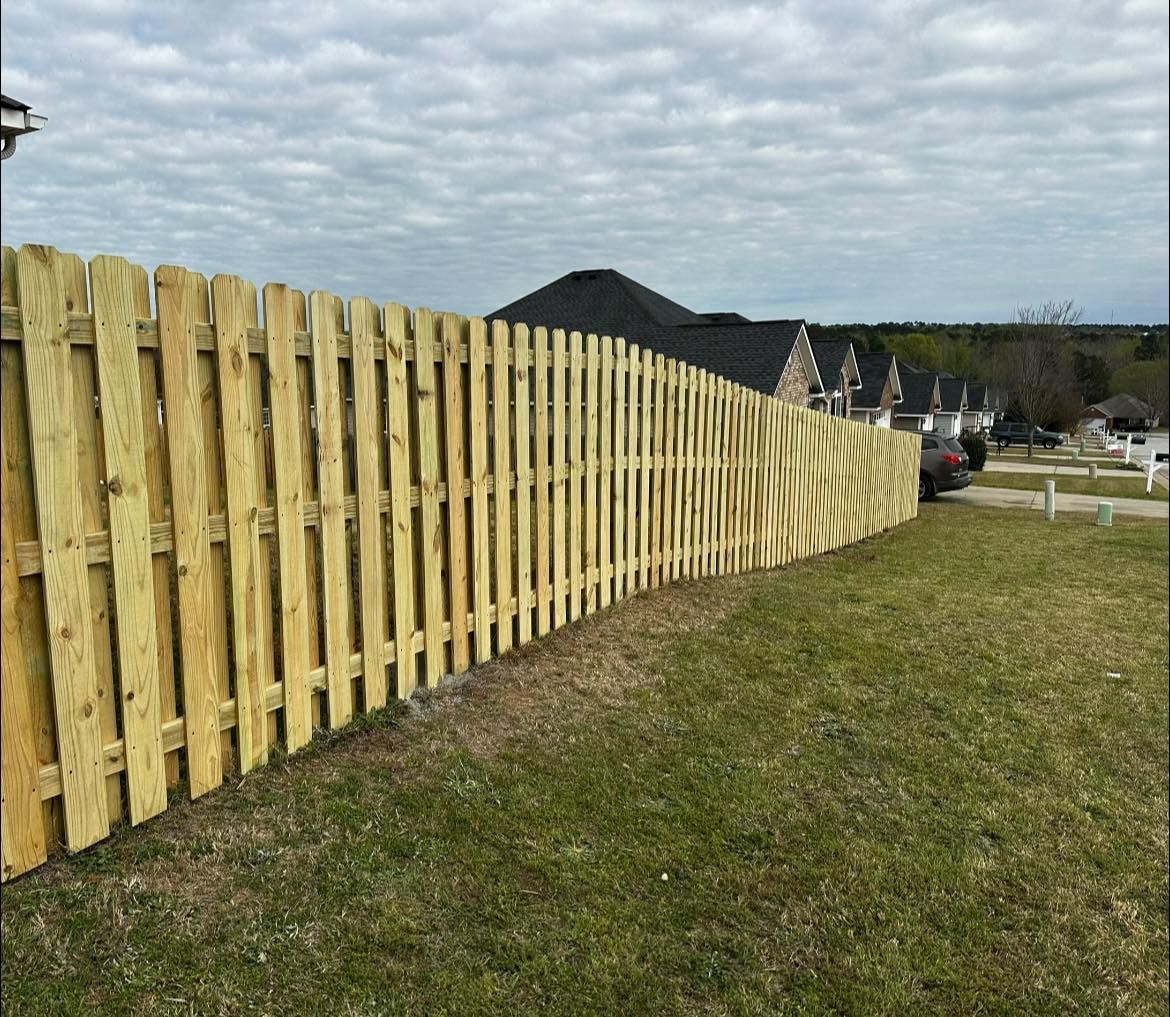
Once the fence is complete and the concrete anchors have cured, the line is visible, the posts are plumb, and gates open and close without binding. On rural properties in the Grovetown and Hephzibah areas, where lot lines often run through wooded or overgrown sections, a cleared and properly set fence line also makes the boundary legible in a way that was not possible when brush obscured it.
Fence type and post depth are related decisions: heavier fence panels, privacy sections, and gates all require posts set deeper and anchored more heavily than a basic wire or picket run. The crew determines post depth based on the fence being built and the soil conditions encountered during digging, not by applying a single standard depth across every job regardless of what the ground holds.
Questions Before Starting Your Fencing Project
These questions address how fence installation proceeds on the kinds of rural and older parcels common in this part of Columbia County, where site conditions along the fence line shape the work as much as the fence type itself.
Why does post depth vary depending on the fence type being installed?
Taller panels and gates create more leverage against the post at ground level, which means the post must be set deeper to resist that rotational force without pulling out or leaning over time.
How does the crew handle a fence line that crosses a significant change in elevation?
The crew steps the fence panels to follow the grade rather than racking them, which keeps the panel frames square while the bottom of each section follows the slope in defined increments.
What makes a gate frame fail over time, and how is it prevented?
Gates fail when the corner posts they hang from are not set plumb and anchored independently from the fence line, allowing the post to rotate as the gate swings; properly set gate posts are anchored in concrete and plumbed before any hinge hardware is attached.
How does brush and root mass along a fence line in Harlem affect post installation?
Root systems from established trees or overgrown brush fill the soil column at post depth with fibrous material that cannot support concrete anchoring; those roots and stumps must be removed before the hole is dug so the concrete sets against undisturbed or uniformly filled soil.
What should a property owner look for in a completed fence to confirm it was set correctly?
Each post should be visually plumb when sighted down the line, panel sections should not show a bow or twist between posts, and gate hardware should operate without the gate binding on the latch side or dragging at the bottom corner.
V & S Grading also
installs fencing in Hephzibah, Grovetown, Evans, Augusta, Martinez, and Appling. To discuss the fence line on your property and what the ground requires before installation begins, contact V & S Grading at (706) 901-0595.