Ground That Holds What You Build On It
Grading in Harlem for sloped lots, uneven parcels, and building pads that need proper elevation before construction begins
Older parcels across Columbia County frequently carry grades that were never shaped for construction—sloped back yards, uneven lots, and low spots that collect standing water after any significant rain. V & S Grading works in Harlem, Georgia, shaping lots, setting building pads, and establishing finish grades so the ground itself supports whatever comes next. Grading is the core of what this business does, and it is the work the owner most wants to be known for.
The process begins by setting stakes or confirming design elevations from the plan, then cutting high spots and filling low areas in compacted lifts rather than pushing loose material around. Each lift is compacted before the next is placed, which is the difference between a finished grade that holds and one that settles unevenly under a slab or pad. The crew then fine-grades the surface to the final slope, directing drainage away from the structure and toward intended outlets.
Schedule a site visit with V & S Grading to confirm target elevations and determine whether your lot requires cut, fill, or a combination of both before any building phase begins.
How Grading Sets the Foundation for Every Next Step
When a lot is graded properly, every trade that follows—concrete, framing, drainage, landscaping—works from a stable, predictable surface. The sequence matters: high spots are cut first, then fills are placed in measured lifts and compacted. Skipping compaction between lifts is one of the most common shortcuts taken on residential lots, and it shows up later as settled pads, cracked slabs, and doors that no longer swing true.
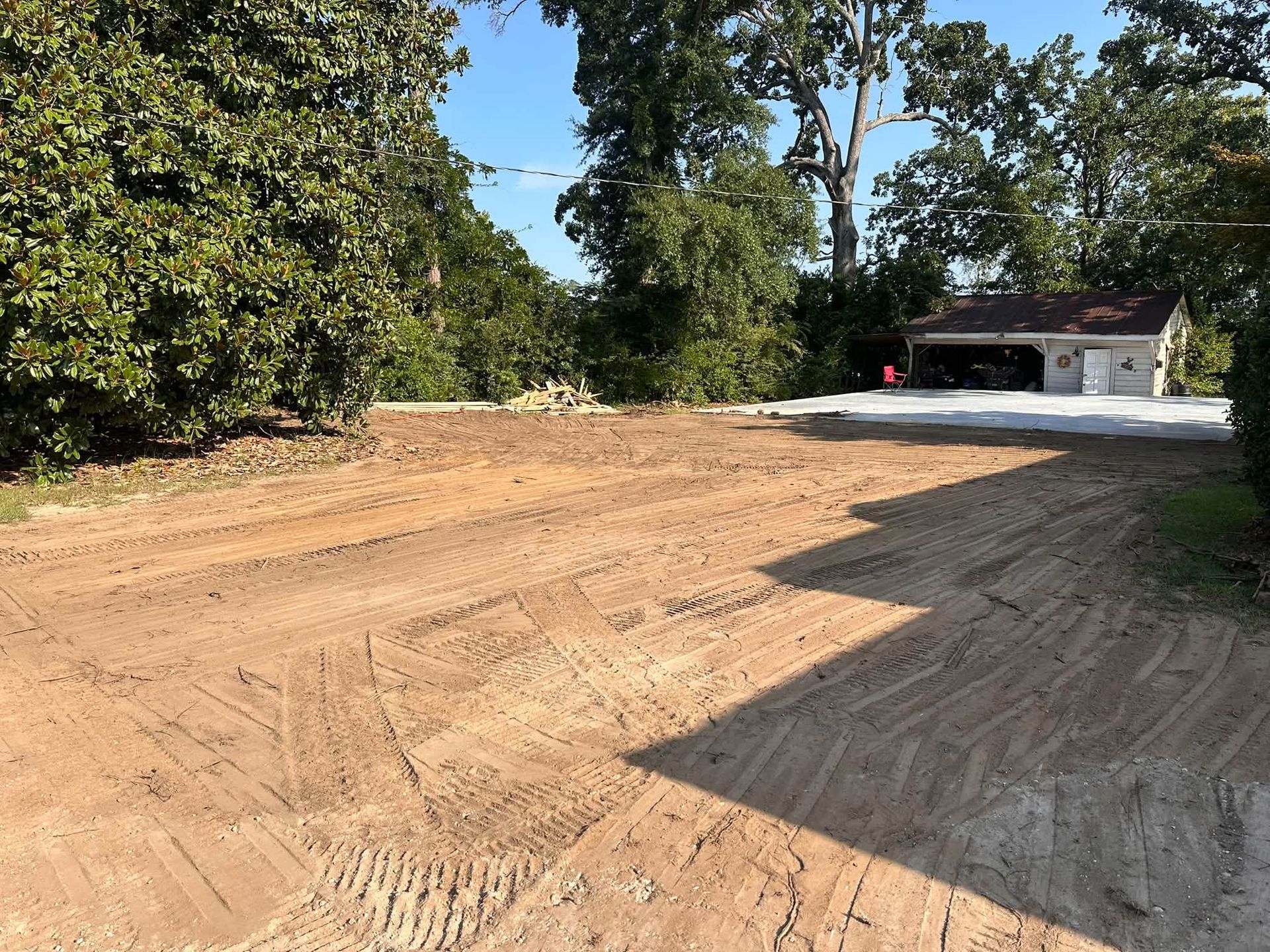
Once finish grading is complete, you can see the results clearly. The lot surface drains in a defined direction, the building pad sits at the correct elevation relative to the street and adjacent grade, and there are no low areas trapping water near the foundation footprint. These are measurable, visible outcomes that a surveyor or inspector can confirm against the design elevations.
Before work begins, it is worth asking the contractor to confirm the target finish elevation for each area of the lot and whether compaction testing is included or will be required by the county for a permitted structure. On older rural parcels with buried debris or variable soil depth, the crew may need to adjust the fill sequence as conditions are uncovered during cutting.
What Property Owners Ask About Grading Work
These questions come up often for property owners in Harlem and across Columbia County who are preparing a lot for construction, reshaping a back yard, or establishing a building pad for the first time.
What is the difference between rough grading and finish grading?
Rough grading moves the bulk of the material to approximate the intended shape, while finish grading fine-tunes the surface to exact slopes and elevations so drainage runs in the right direction and the building pad meets plan requirements.
How does the crew determine the correct slope for a finished lot?
The target slope is typically set by the site plan or by the drainage requirements of the structure being built, and the crew sets grade stakes at measured intervals to hold those elevations as material is cut and filled.
Why does fill need to be placed in compacted lifts rather than all at once?
Fill placed in a single deep layer cannot be compacted uniformly through its depth, which leaves voids that compress over time under load, leading to settled slabs and uneven surfaces above.
What should a property owner confirm before grading begins on a sloped lot in Harlem?
Confirm the finish elevation at each corner of the building pad, the intended direction of drainage across the lot, and whether any underground utilities need to be located before cutting begins.
How can you tell whether a graded lot has been finished correctly?
A properly finished lot drains visibly away from the building pad in all directions, has no low areas collecting water near the structure, and matches the design elevations within the tolerance required by the plan or permit.
V & S Grading also performs grading in Grovetown, Evans, Augusta, Martinez, and Appling. If your lot needs reshaping before the next phase of your project, contact V & S Grading at (706) 901-0595 to arrange a site review and confirm what your property requires.