
Outdoor Surfaces Built on a Prepared Base
Hardscape design and construction in Harlem for patios, walkways, and retaining walls where base depth and drainage determine long-term performance
A patio or walkway that shifts, settles, or develops low spots in the first few years is almost always a base problem, not a surface problem. V & S Grading designs and builds hardscapes in Harlem, Georgia and the surrounding area, including patios, walkways, retaining walls, and related outdoor surfaces, with the same crew handling the site grading, base preparation, and finished surface installation. Because the grading and drainage work is done by the crew building the hardscape, the slope, base depth, and water routing are established correctly before any surface material is placed rather than addressed afterward when fixing them is far more disruptive.
Before any surface material goes down, the crew establishes the correct sub-base depth, compacts it to a consistent bearing surface, and sets the finished slope to direct water away from the house and off the hardscape edge without pooling. Base depth and edge restraint are the two variables that most directly determine how long a hardscape surface holds its position over time; a surface installed over an undersized base will begin to shift within a few seasons, and one installed without adequate edge restraint will spread at the perimeter as lateral pressure from foot traffic and adjacent soil builds up. Asking a contractor what base depth they use and what edge restraint is included in the quote is the most direct way to evaluate whether two bids are actually comparable.
Request an on-site review of your proposed hardscape area so V & S Grading can assess the existing grade, base requirements, and drainage outlet before a scope is built.
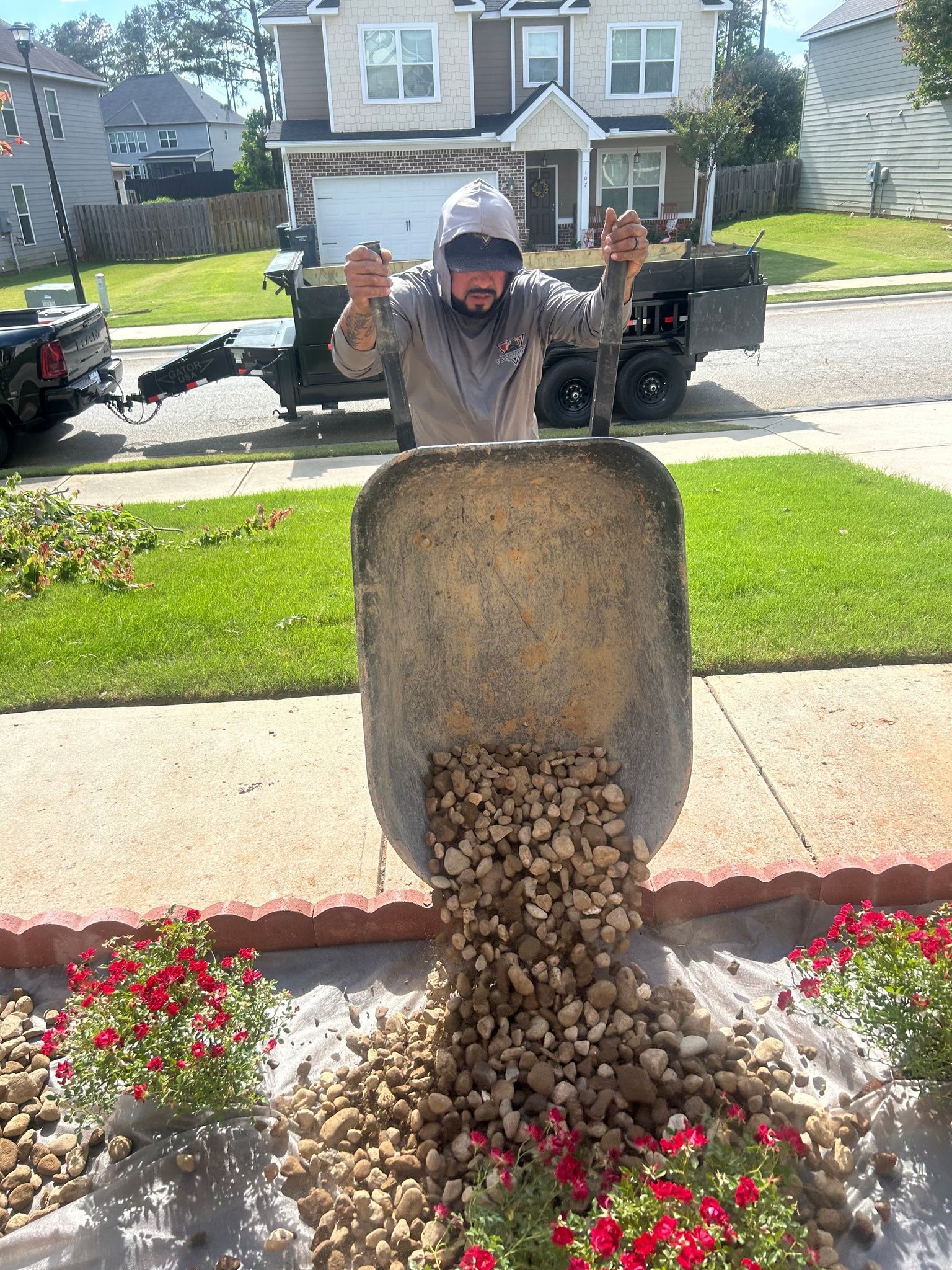
Why Base and Slope Determine Surface Longevity
The finished appearance of a hardscape surface is set during the base preparation phase, not the installation phase. If the sub-base is compacted to a consistent elevation with the correct cross-slope built in, the surface material above it replicates that geometry. If the base has soft spots or inconsistent compaction, the surface above those spots will migrate downward independently of the surrounding material, creating the gaps and lips that are the most common complaints about hardscape surfaces a few years after installation. Concrete patios, pavers, and flagstone all behave differently at the surface, but they all depend on the same base performance.
After a properly prepared hardscape is complete, the surface will sit at a consistent elevation across its entire area, edges will be held firmly by restraint material rather than tapering away from the field, and water will run off the surface in the direction the slope was set rather than collecting in the center or at the low edge near the house. In Grovetown and Dearing, where properties range from newer subdivision lots with defined outdoor living areas to older rural parcels with uneven existing grades, the base preparation scope varies considerably but the performance standard does not.
Retaining walls within a hardscape project involve an additional set of considerations: the wall must be battered or engineered to handle the lateral soil pressure behind it, drainage must be provided at the base of the wall to prevent hydrostatic pressure buildup, and the footing depth must account for the retained height. A wall that is sized for appearance but not for load will lean forward within a few years regardless of how well the surface materials above it are installed.
What Hardscape Owners Ask About the Work
The questions below address the installation process, base preparation standards, and quality indicators that apply to patios, walkways, and retaining walls on the residential property types found in and around Harlem.
How is base depth determined for a patio or walkway installation?
Base depth is determined by the surface material being used, the expected load, and the condition of the native soil beneath the project area, with heavier surface materials and softer native soils both requiring a deeper compacted aggregate base to achieve a stable bearing surface.
What is edge restraint and why does it affect how long a hardscape holds its shape?
Edge restraint is a mechanical barrier installed at the perimeter of a paver or flagstone surface that prevents the outer units from migrating laterally over time, and without it the surface gradually spreads outward at the edges as foot traffic and soil movement push the field material toward the least resistant boundary.
How is slope set in a hardscape surface and what happens if it is not consistent?
Slope is established at the base preparation stage using a level and grade stakes before any surface material is placed, and inconsistent slope results in areas where water collects on the finished surface rather than draining off, which accelerates staining, moss growth, and in some cases freeze-related damage at the pooling point.
What drainage considerations apply to a patio built against a house foundation in Harlem?
The finished patio surface must slope away from the foundation at a minimum grade so water drains toward the yard rather than toward the house wall, and in cases where the existing grade runs toward the house, a surface drain or channel may need to be incorporated into the hardscape to intercept water before it reaches the foundation.
How do you identify quality installation in a finished paver or flagstone surface?
Quality installation shows consistent joint spacing, no rocking or movement when individual units are pressed, edges that are held firmly at the perimeter, and a surface that drains completely without pooling at any point across the field.
V & S Grading also builds patios, walkways, and retaining walls in Grovetown, Evans, Augusta, Martinez, and Appling. To talk through your hardscape project and what the base and drainage work will involve on your specific lot, call V & S Grading at (706) 901-0595.